
A lot of what I research and teach is how to use your mind to increase what you can achieve with your physical capacity and skills. Especially in high-pressure moments, like executing a skill that’s not feeling ‘automatic’ yet.
This article is about managing those times when your capacity drops. Maybe you’re physically or mentally overloaded. Maybe life or work pressures have ramped up. Maybe you’re recovering from a virus, or injury or something else that’s meant time away from work, sport or play. Maybe, for no clear reason at all, you’re just having a sh!t day.
Living with lifelong chronic health conditions means I’ve always had to be more vigilant about doing more than my body can support on a given day, as it takes less to experience the impacts of overload and longer to crawl back to having more capacity again. Being interested in all the strategies that lead to consistent, high performance that aren’t just physiological has shaped my career in more ways than I could have imagined. It’s why I wrote a PhD on how mental, technological, social, environmental and contextual processes contribute to riding a bike really fast. And how individualised these are.
I didn’t know I had connective tissue, autonomic and immune challenges when I started this work. But I knew that I could only ride at a national level if I rested more than my peers. Coaching programs that worked for other people would always send me into a fatigue hole. There have to be other ways to keep building speed, I kept thinking. And when it quickly became obvious that there are sooooo many other ways to do this, I became interested in how the smallest things add up and impact the success of the others.

The smallest things
Many small things adding up is as true off the bike as it is on it.
In 2024, I ran a couple of resilience and wellbeing workshops with the Hunter Adults Financial Collaborative. Drawing on lessons and insights into how athletes at all levels navigate pressure and build resilience, the workshop was aimed at anyone in our local community experiencing extra challenges of their own at that time – disability, homelessness, chronic health, domestic violence, unemployment – or supporting someone else who is.
After learning about individual strategies that support their own resilience and wellbeing, and why they work the way they do, I asked participants to pause for a bit to think, and name, one small thing they’d done recently that gave them a bit of extra energy or capacity.
One person mentioned using some sample face moisturiser that she’d received. A small moment of luxury, that fitted in her daily routine without extra effort. She realised how important that moment had become in giving her a minute for herself – a minute of reset and recalibration time – before jumping back into more challenging situations.
I think about her each time I reach for my own moisturiser. At some point, I started matching the activity with a quick reflection on something that had gone well in the last 24 hours, or challenging myself to explore the opposite view of one of my worries at the moment.
The smallest thing. A little bit of calm from the action, dopamine from the nice smell, confidence from the active reflection and the bonus benefits of using neuroplasticity for good.
What’s moisturiser got to do with riding a bike?
Whether it’s work, parenting, caring-for-parents, cost of living pressures, or ongoing distress about the state of the world, a lot of people I talk to are feeling overloaded right now. Consider this article as a prompt to take a moment to think about one tiny part of your day that gives you an extra bit of energy or capacity. Something you can lean into more intentionally for the positive benefits it brings.
If you’re having a bad day on the bike (or the pool, the gym, the anywhere), what’s one small thing you can do that turns that experience into a better one?
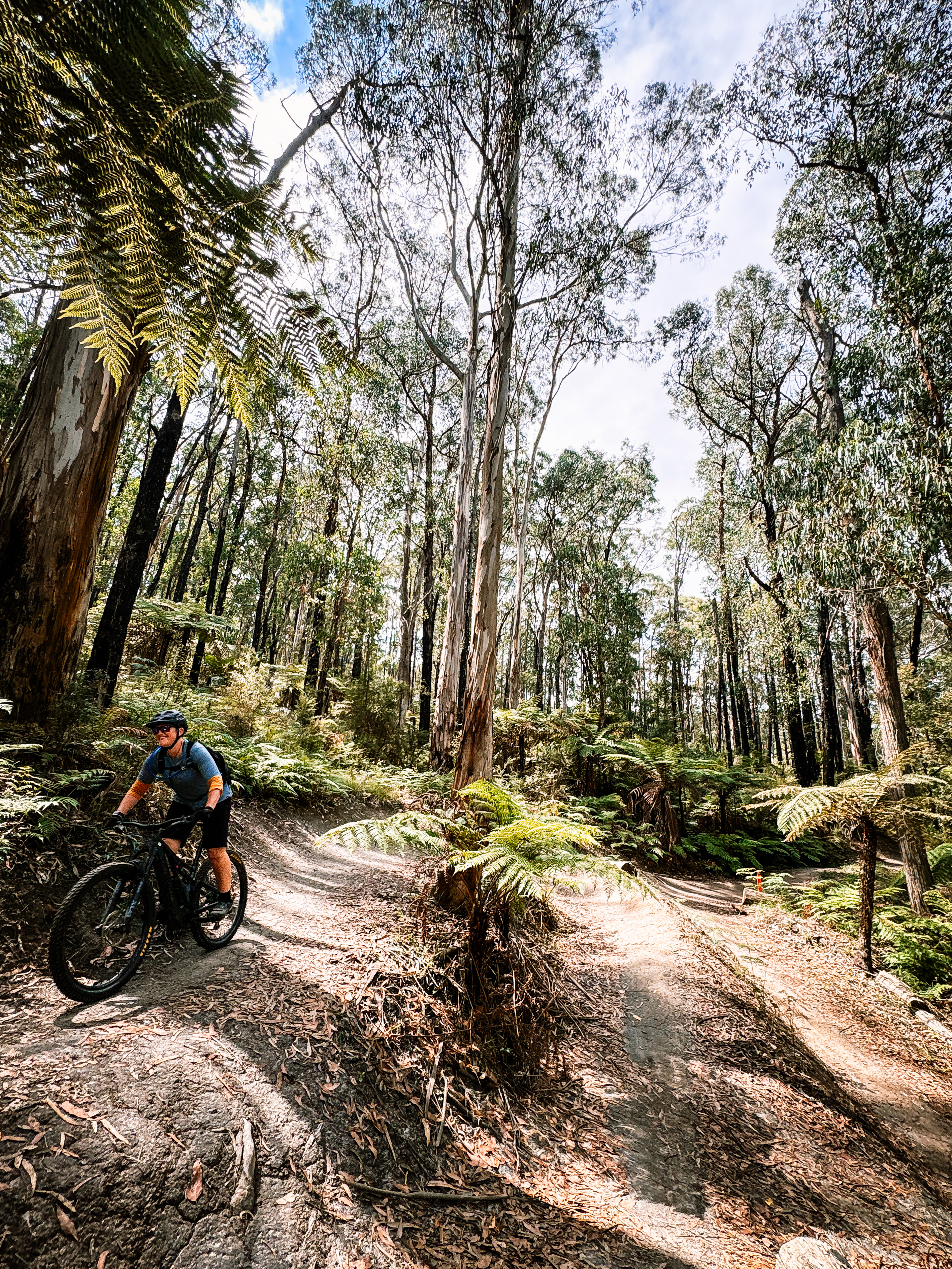
My personal faves right now, as I enjoy those first rides back after some health-induced time off, include:
- Cheering internally when a small movement or favourite corner feels particularly good (thanks to Imogen Smith for that one).
- Lowering the intensity/complexity level of the ride so I get more of those good sensations than you’re-not-quite-there-yet ones.
- Packing a favourite snack and eating it at my favourite point on the trail
- The joy of wearing new socks that I’ve been saving for these exact rides!


If you want to dive deeper into mental strategies that work for you—from overcoming anxiety to understanding the why behind your most effective personal hacks— consider an online coaching and strategy session.
I hope this month’s field note has prompted you to think of a few good ideas to keep leaning into as well.
This post was originally created for The Cognitive Advantage Newsletter. If you want to receive more like it in your inbox once a month, you can join here!
If you want to dive deeper and learn more, there are two ways I can help you:
Brain Tune-Ups: Personalised coaching sessions to develop your mental skills so you can get more out of your physical skills during your next ride or race. Learn more about your unique cognitive processing style out on the trails (and off them!), and how to build on this with research-backed strategies for more flow, less overwhelm and more focus and control when it counts.
** September upgrade offer: Book an 80-minute session for the cost of a 50-minute session. **
The Mastering Cues online course: This self-paced course expands your toolkit for mental efficiency and precision out on the trails. Guide your body under pressure, reduce ‘cognitive load’ and upgrade your riding (or coaching!) abilities from the comfort of the couch.
Leave a Reply