
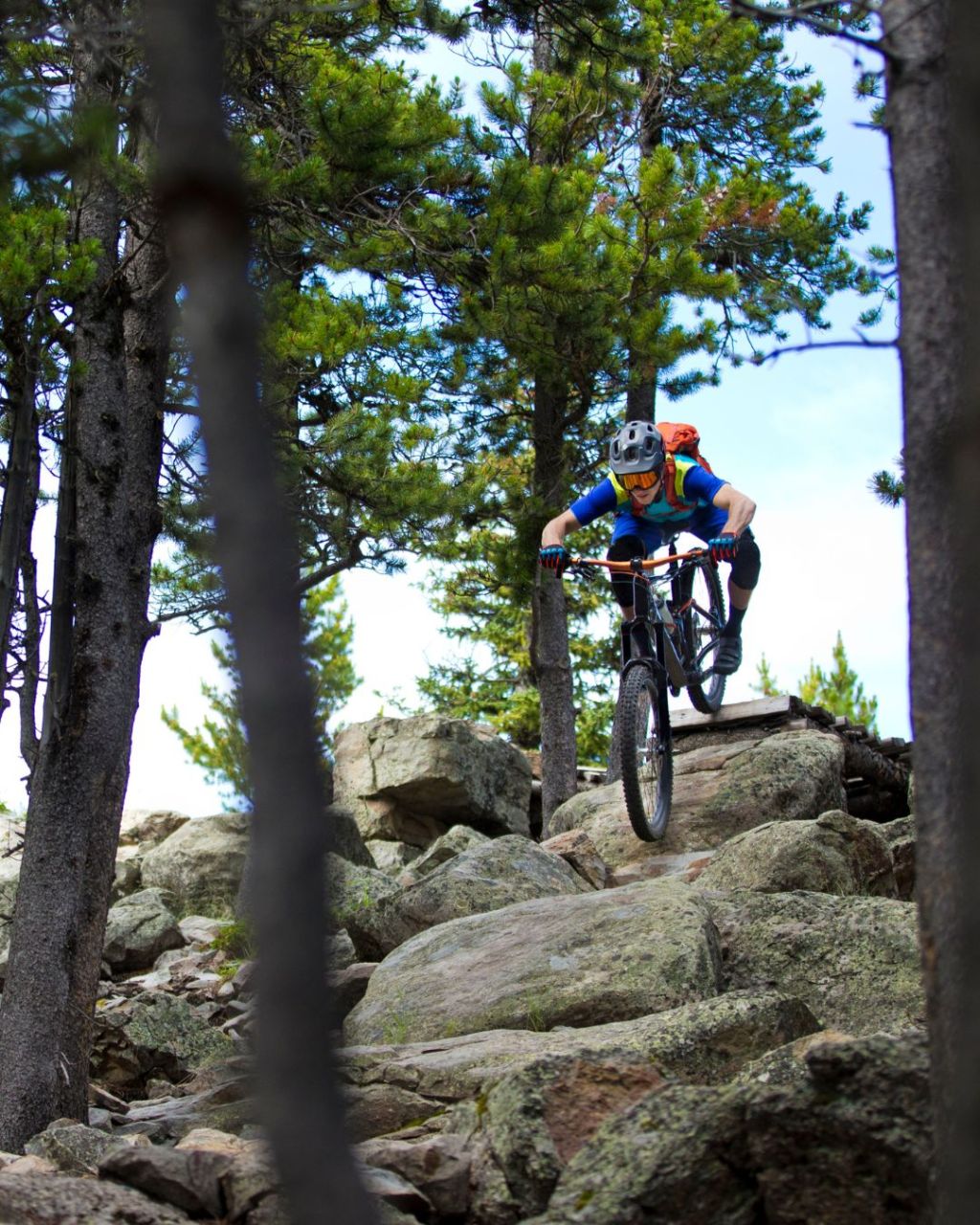
In addition to mountain biking, one of my other favourite things is trapeze: for the strength it’s been developing in my upper body, for the community that’s separate to the bike one (in healthy ways given it’s also my work world), for how much I enjoy the sense of progress and challenge, for what it keeps teaching me about bodies, minds and learning new skills, and for this month’s research-supported ‘story with a point’.
What trapeze taught me about your riding!
Last week at trapeze lessons, I did something not-so-good while working on a warm-up move called a ‘meat hook.’ This is where you end up hanging from one arm with your legs folded over your torso like a clock hand pointing to five. Something made a popping feeling, like one rib had moved over the other. More likely a muscle or ligament doing something it’s not designed to. The burn was real. Trying to breathe, sit, reach – not so good. An ice pack was a welcome yet somewhat frustrating relief.
Speaking to one of the coaches before sadly but sensibly leaving the class early, I mentioned I’d felt a weird feeling in that same area a couple of times before while practising meat hooks, and stopped. She helped me pinpoint where my technique was off, and what to do instead – what shape to aim for, how to better engage my core, where not to collapse. All things that would shift my awareness next time I was on the bar, and reduce the worry about doing whatever it was I’d just done again.
She also reminded me that the more time you spend learning something – whether it’s trapeze, mountain biking, or your own favourite pursuit – the more you get better at knowing how something should feel. Which feelings and sensations are OK, which ones are important to pay attention to.
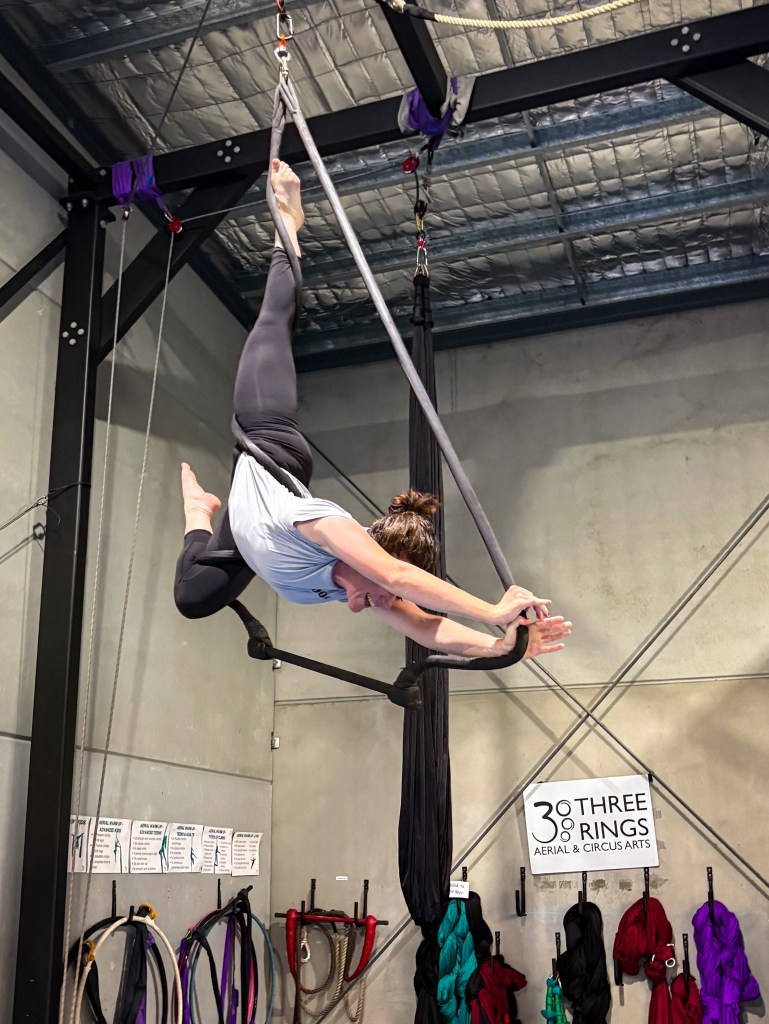
One of the many things I love about improving at trapeze is how it reminds me of the mental and physical learning curve you experience when first riding off-road. As I’ve developed my skills on the bike over three decades, trapeze provides a useful contrast. It helps me be more articulate about skill learning claims in everything from casual conversations to academic literature, like the many roles of awareness, attention, focus, embodied knowledge and self-regulation, and the difference that strength, familiarity, and cognitive techniques make to the incredible things our bodies can do.
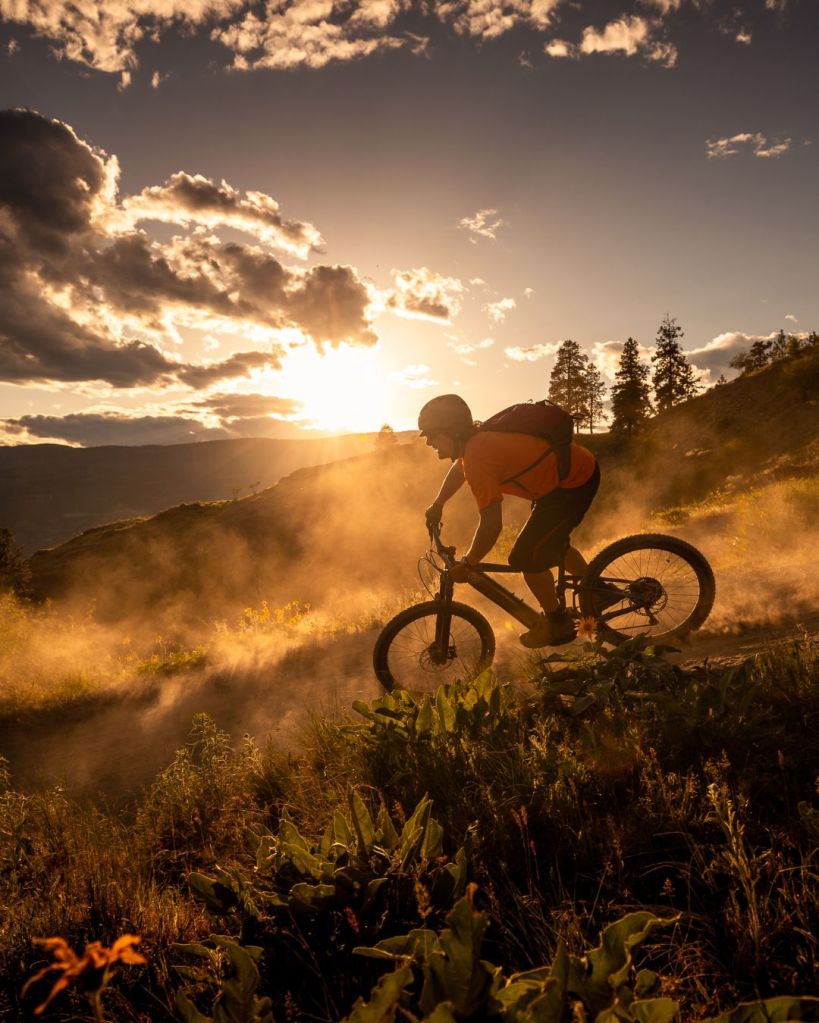
Fast-tracking that attention, awareness, embodied knowledge, and all those things we call ‘experience’ is what makes coaching so beneficial.
As I learned from the trapeze coach, it’s one thing to feel ‘off,’ but a skilled external perspective helps you pinpoint, name and correct the subtle flaws in your technique before they become a painful injury, a race-ending mistake or drag on for ages stopping progress or enjoyment somewhere else.
I’m really enjoying this aspect of coaching while working with my own clients and developing my own coaching style — helping people to find words and simple cues that overcome a sticking point.
By unpacking what’s worked for you in the past and giving those processes a name, we can build on your existing expertise with clear, actionable strategies. These can be anything from a specific reset cue for mid-ride or mid-race, to a deeper understanding of your own processing style and how to lean into it and support it more, to a better understanding of what regular bike rides are bringing to your mental coping, processes and resilience skills off the bike.
Next time you feel that pop of doubt, or the sensation that something is ‘off’, do something to address it before it turns into a meat hook situation.
If you feel your brain kick in with some helpful wisdom or new strategy to try, give yourself a little fist pump to celebrate what your own expertise and experience brings to that situation.
If there’s something nagging you about your own mind-body riding experience but you can’t quite name what’s going on, or feel you could benefit from taking a different approach, consider reaching out for a 1:1 online strategy session.
This post was originally created for The Cognitive Advantage Newsletter. If you want to receive more like it in your inbox once a month, you can join here!
If you want to dive deeper and learn more, there are two ways I can help you:
Online coaching / strategy session: Learn more about your unique cognitive processing style out on the trails (and off them!), and how to build on this with personalised strategies for more flow, less overwhelm and more focus and control when it counts.
The Mastering Cues online course: This self-paced course expands your toolkit for mental efficiency and precision out on the trails. Guide your body under pressure, reduce ‘cognitive load’ and upgrade your riding (or coaching!) abilities from the comfort of the couch!
 Intelligent Action
Leave a comment