
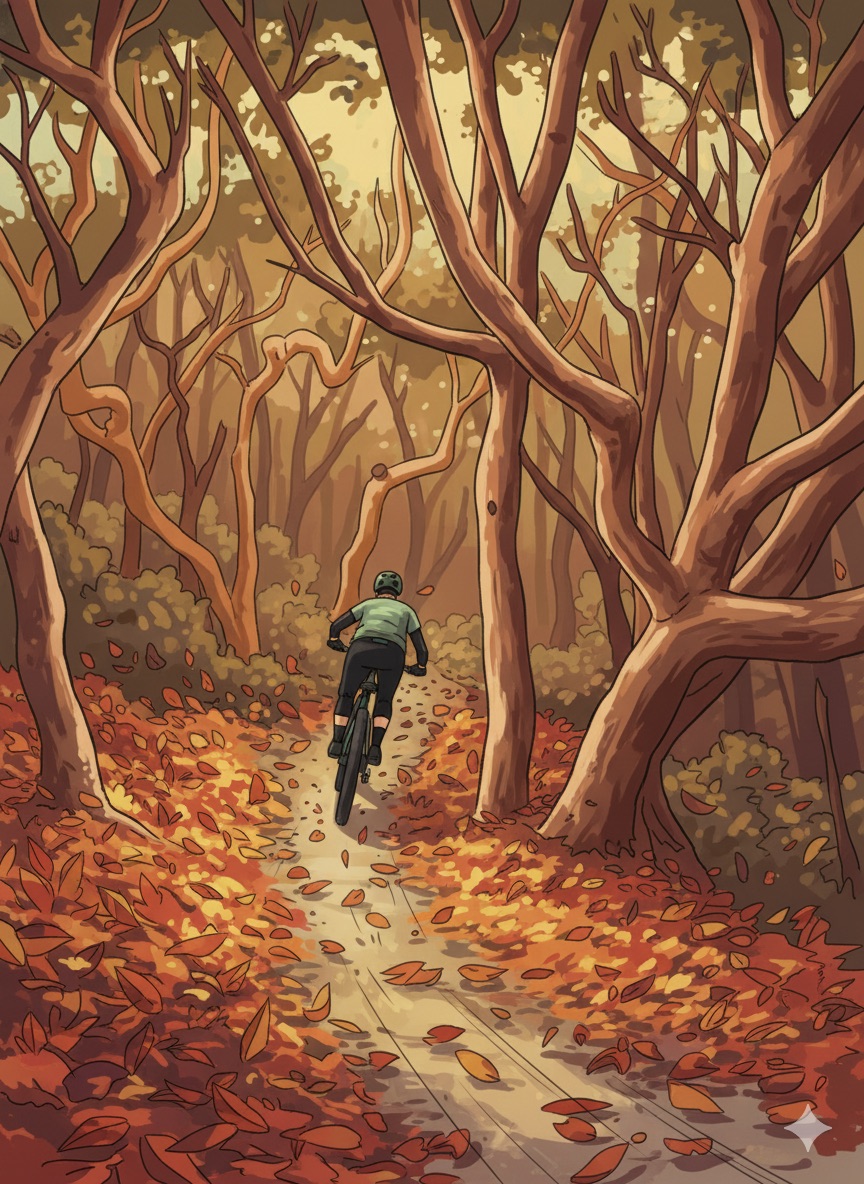
I went for a ride the other day (just for something different)! A friend and I were sessioning some of the trickier features on our trickier trails. The easier, B-line was rideable if we backed ourselves and got a few things right on the way down. It was pretty steep, and there’s a lot of extra bark and leaf litter on the ground at the moment because Summer In Australia.
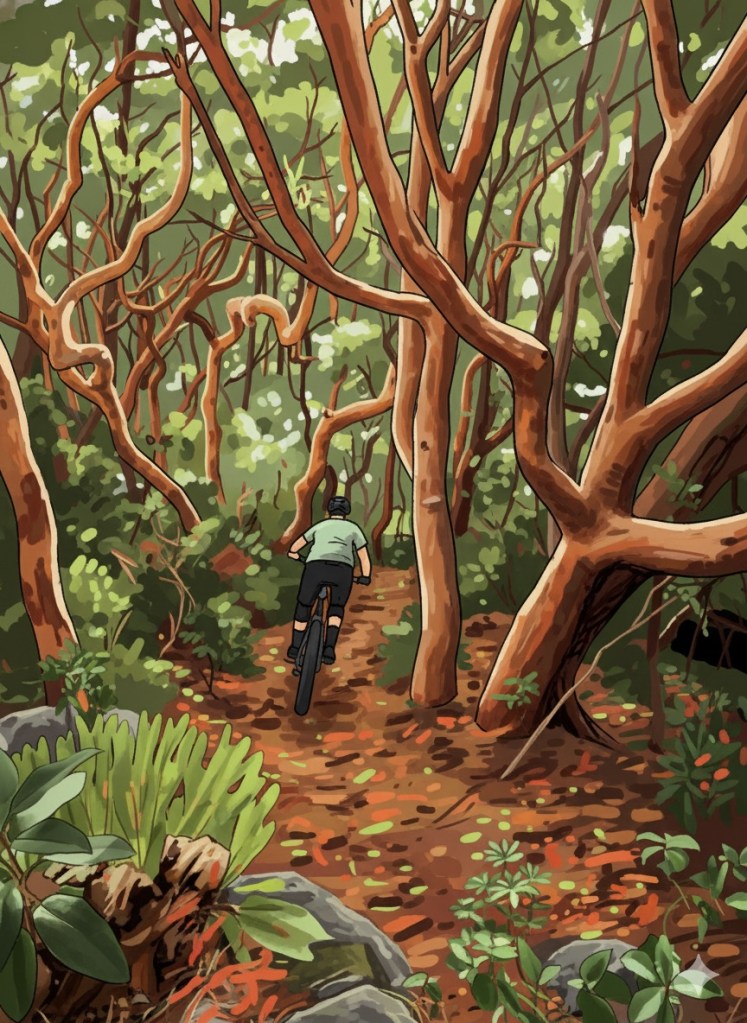
Eyeing off the A-line made me pause. It was one long, exposed rocky slab. While the rock offered reliable traction because it was too steep for any leaf litter to grip onto, there was less room for error—nowhere to stop or put a foot down if things went how I hoped they wouldn’t.
It looked rideable, and I was about to give it a go when I remembered that I don’t have the depth perception of most other people. Clear vision comes and goes for me depending on a number of factors: salt, hydration, fatigue, and whether my eyes and my brain are working well together in a given moment. Most of the time I see in what’s probably closer to a slightly blurred 2.5D than high-def 3D. This has the advantage of making most trails (and hill climbs) look way less steep than they are. But it can also give me a confidence that’s a little too high for the thing I’m about to do….like ride that long rock slab, or climb the type of hill that most people complain about.
I yelled from the top of the descent to my friend cheering at the bottom that I had no depth perception. Without judgment or questions, she started pointing out how small she looked from far away, exaggerating the smallness like a stand-up comic in a TV show I used to love as a kid.
“It must actually be pretty steep,” I thought, laughing. Come to think of it, it was mighty hard to walk up it, so that’s some usual non-visual info on the steepness as well. I decided to come back later with extra padding and a helmet that would better protect my teeth. It was a good decision built on data beyond just what my eyes were telling me.
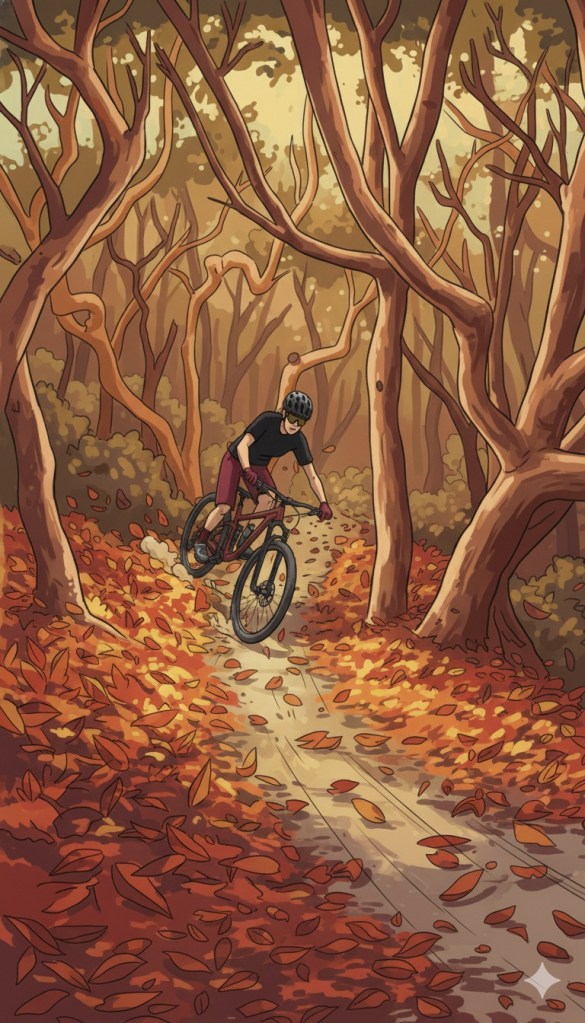
Perception and perspective
In 2025, I started vision therapy, and I’ve been incredibly motivated by the difference it’s made to what I used to call ‘vegetable soup vision’ (when the trails sometimes look like a vague, murky mess). It’s also taught me an enormous amount about the strategies I’ve developed over the last 40+ years to ride a bike quickly when the shape, texture, and 3D-ness of the fast-approaching surface is unclear.
These are transferable strategies for remembering, visualising, predicting, feeling, imagining, pacing, technique, and emotion-regulation—all critical for reducing mental load while keeping a healthy focus (mental and visual) where it counts.
The moral of this story is that you don’t need to see everything, or know everything, or be able to do everything to make a good decision or achieve your goals. A robust strategy allows for multiple ways of gathering information, leaning on others, and adding a buffer for that first leap of faith.
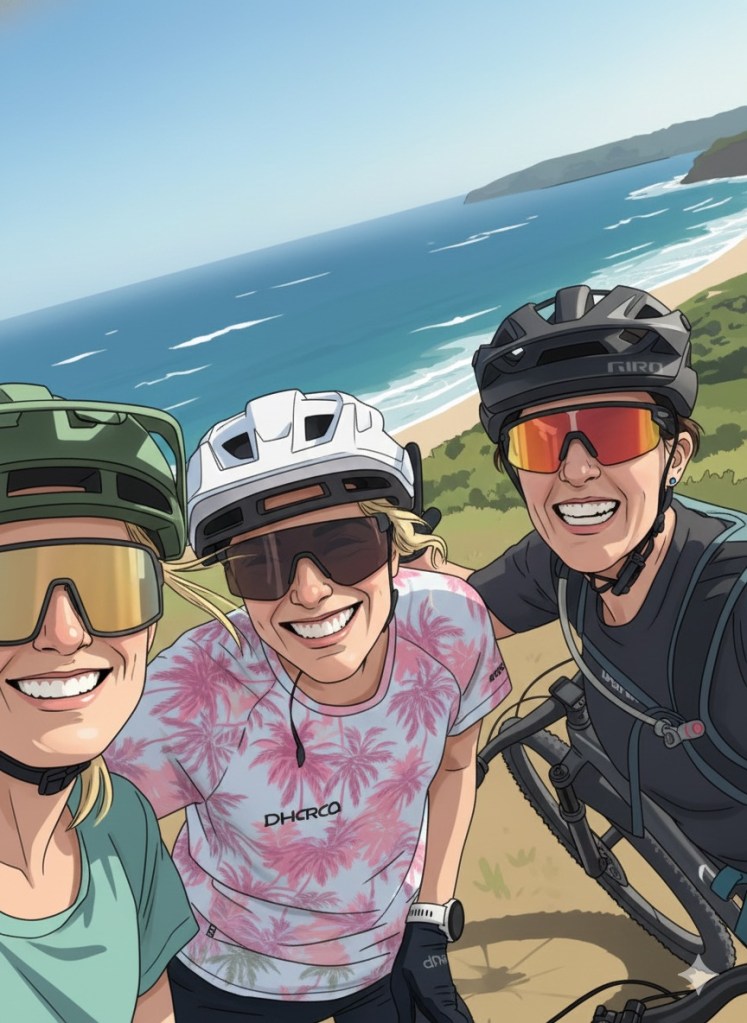
As you set your own eyes on the year ahead, remember you don’t have to know, see, or be able to do everything either. If you’re feeling stuck, or if your progress has plateaued, the skillsets you need to overcome those challenges are already there, just waiting to be augmented, sharpened or brought into focus in a way that works for you.
Get in touch if I can help you refine your own strategies in those early stages of trying a new thing, or the forever-learning, upskilling and continuously-improving stages. And next time you’re doing something really well, take a moment to reflect on the strategies that allowed you to do it. They might not have been so obvious early on but they almost certainly give forward to how you approach other tricky challenges as well.
This post was originally created for The Cognitive Advantage Newsletter. If you want to receive more like it in your inbox once a month, you can join here!
If you want to dive deeper and learn more, there are two ways I can help you:
Online coaching / strategy session: Learn more about your unique cognitive processing style out on the trails (and off them!), and how to build on this with personalised strategies for more flow, less overwhelm and more focus and control when it counts.
The Mastering Cues online course: This self-paced course expands your toolkit for mental efficiency and precision out on the trails. Guide your body under pressure, reduce ‘cognitive load’ and upgrade your riding (or coaching!) abilities from the comfort of the couch!
 Intelligent Action
Leave a comment