
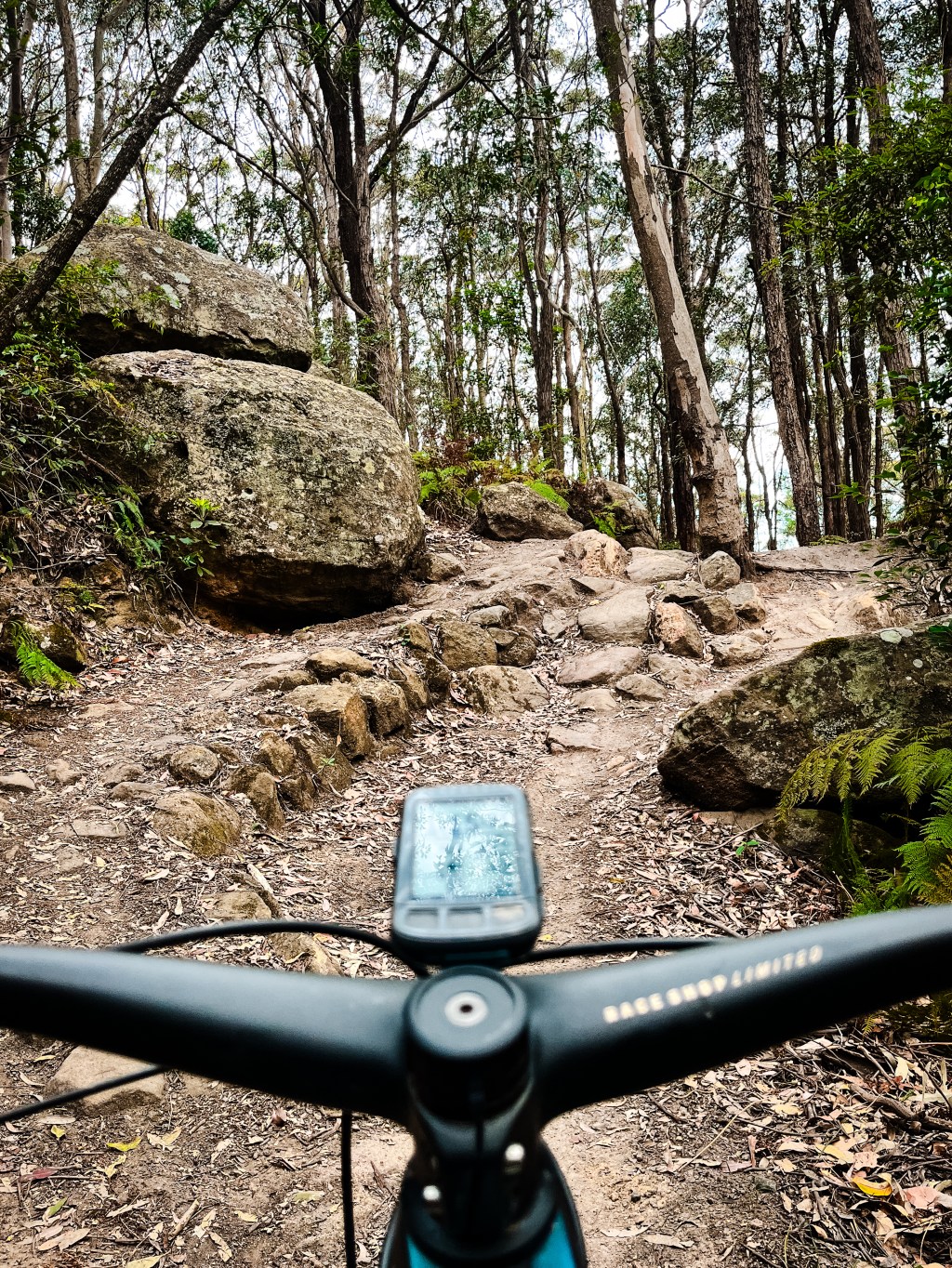
This post is a prompt to reflect on what your descriptions of movement, and the places you move in, reveal about what you think, notice and joyfully ignore. My own prompt for writing about this topic came from a conversation I had after showing one of my favourite people in the world, Big Dog, around our local trails at Glenrock two weekends ago.
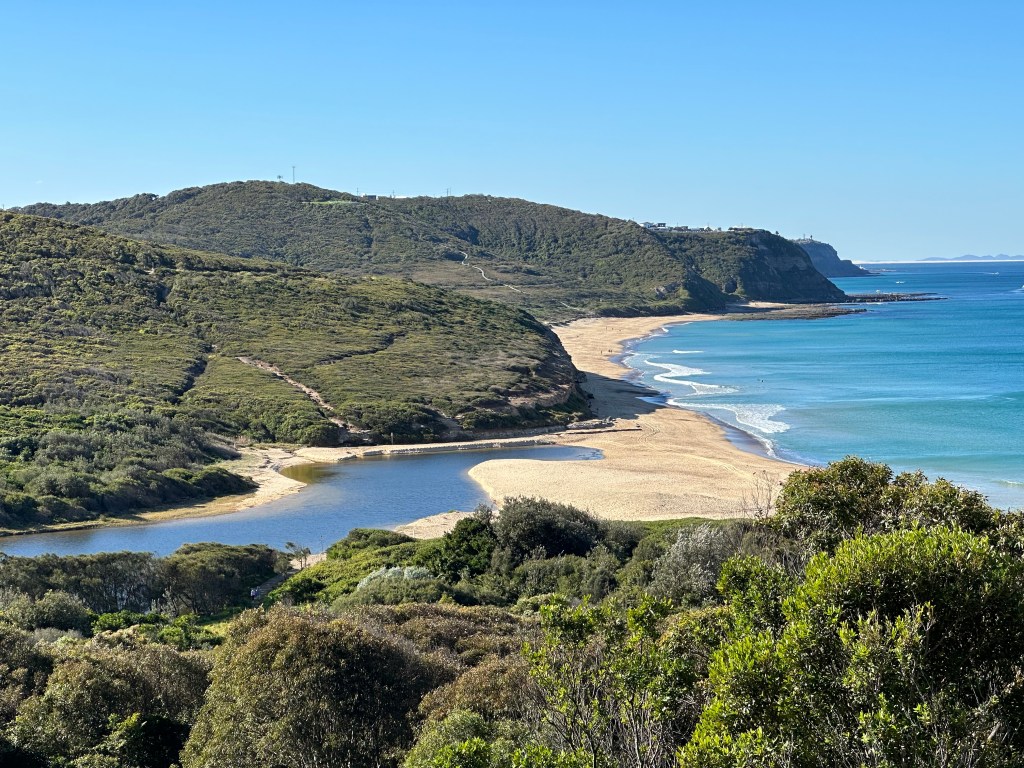
There’s no tap at Glenrock and no toilet. There is almost every type of trail you could hope to find though: bike park flow, secret technical descents, stunningly beautiful linking trails, hills that keep you honest and challenge your skills, gumtree-lined fire roads for bonus chat time, and trails of all types that take you to stunning lookouts with breathtaking views of the ocean. (Read more about the past, present and future of Glenrock in this story I wrote for Flow Mountain Bike.)
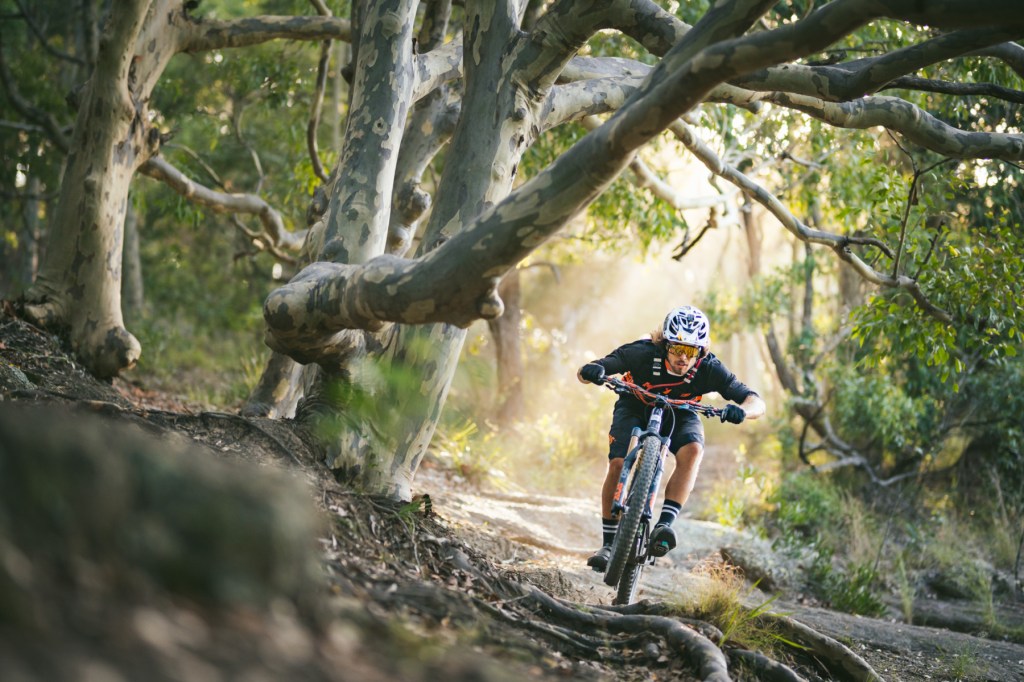
Big Dog and I have ridden together, raced, travelled, eaten a lot of pizza and lived as flatmates over the years. We share a love of exploring quality local trails. We also have a good sense of what the other likes to know before riding a trail blind, something that’s particularly useful in a location as varied as Glenrock.
Instead of describing the trail in its entirety, I’d say things like, ‘Look for high lines on the extreme left or right.’ Or ‘There’s a section partway down this one that looks like a jump, but someone’s put a ramp on the other side of it. The other side of it is pretty sketchy and worth seeing before coming in faster.’ Or ‘This one crosses a heap of other trails, so follow my wheel!’
Trail talk: what your words reveal about how you move
The fascinating thing about trail talk is how much it reveals about cognition while riding. What we notice, what we anticipate, what we scan for, how we help someone else to do the same, and how much you don’t need to notice or see to ride something pretty well.
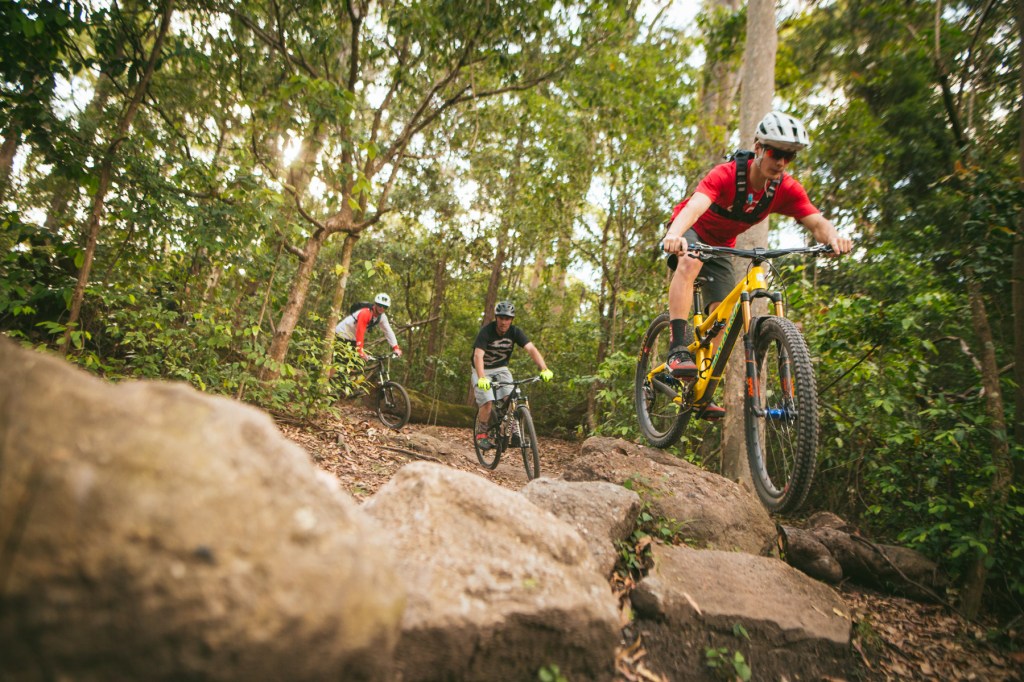
Even more fascinating is what these conversations reveal about our abilities to notice differences and similarities between ourselves and others. Trail talk after a trail usually reveals what we noticed about a trail on the way down. Trail talk before a trail guides someone else’s noticings. This reveals a sophisticated ability to notice the differences and similarities between our own bike-handling skills, perceptive and predictive abilities, and those of the person we’re riding with.
For an unknown trail, thoughtfully shared background info can be the difference between scanning for a thousand things or safely focusing on a few key features. It ups the flow, ups the safety factor, and reduces mental load.
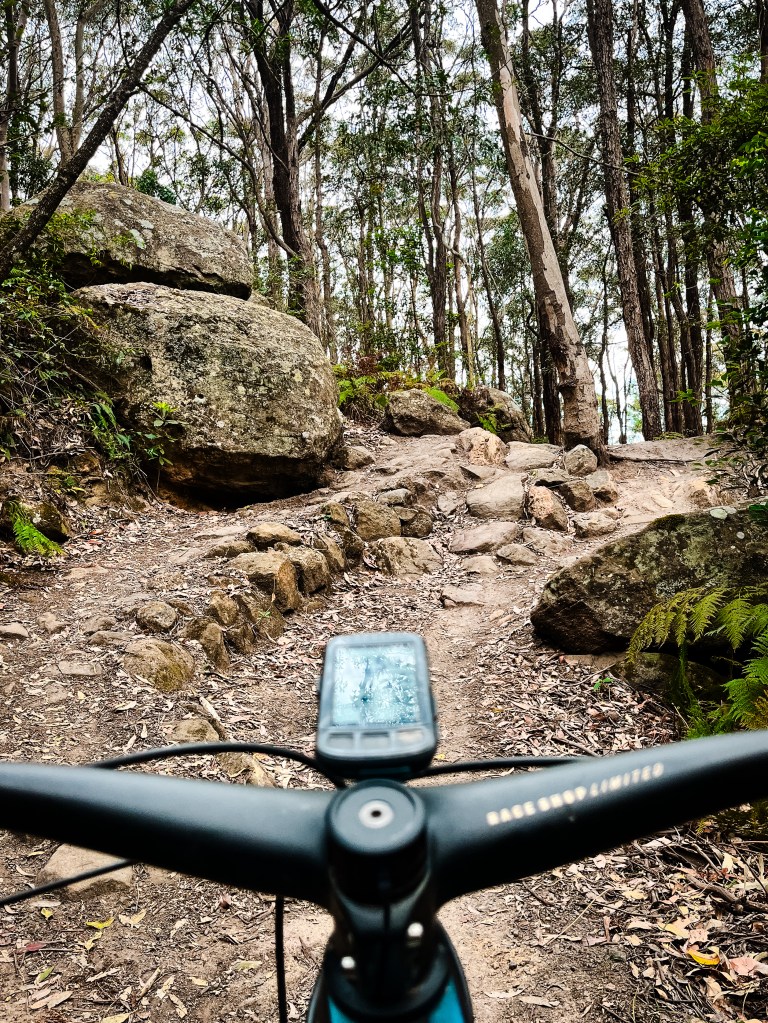
The things we scan for become cues: cognitive shortcuts that let us perform extraordinary mental and physical feats without having to think each thing through in exhaustive detail. Spotting lines on the high left or right become cues for direction and speed, with the confidence that an eroded mess of possibilities will link up without forcing you to a halt. A log becomes a cue to modulate your speed and body position to roll down the other, steep side of it that you can’t see yet. Following another rider provides a myriad of cues for how to move, what the surface is like underneath them and where to go for maximum enjoyment when several, criss-crossing, unmarked trails suggest multiple fun ways down the hill.
Good cues make us mentally efficient by narrowing our focus into the part of the movement that helps the rest of it flow. They free up our minds from monitoring or assessing a thousand other factors that contribute to how we move well, safely, and at speed.
Next time you’re exploring somewhere new with a friend, or sharing your thoughts on how to approach a differently challenging task in sport or at work, take a moment to notice what the banter between you reveals about how you both think, move and contribute to each other’s success.
What cues cut through the clutter or add smoothness and efficiency? How would those cues change if you were talking with someone else? What cues have you noticed yourself falling back on that someone once said to you?
My favourite part of the course I made on Mastering Cues for Riding Well Under Pressure is hearing the massive variety of cues riders draw on in a thousand billion different situations through their activity responses and the live lessons. If you’ve done the course, I hope you are still enjoying finding more and more cues that work for you in all kinds of situations. And that you keep feeling the confidence and strategies this brings to your mental approach to riding in ways that extend far beyond the time spent doing the course itself!
This post was originally created for The Cognitive Advantage Newsletter. If you want to receive more like it in your inbox once a month, you can join here!
If you want to dive deeper and learn more, there are two ways I can help you:
Online coaching / strategy session: Learn more about your unique cognitive processing style out on the trails (and off them!), and how to build on this with personalised strategies for more flow, less overwhelm and more focus and control when it counts.
The Mastering Cues online course: This self-paced course expands your toolkit for mental efficiency and precision out on the trails. Guide your body under pressure, reduce ‘cognitive load’ and upgrade your riding (or coaching!) abilities from the comfort of the couch!
 Intelligent Action
Leave a comment